Tooth Decay Jaw Bone . When teeth are lost or decayed, the jawbone no longer receives stimulation for teeth and the bone begins to decay as a result. Bone loss can occur in the upper (maxilla) and lower (mandibular) jawbone for a number of reasons. Dental jaw model with teeth, roots, gums, gum disease from www.rmperiohealth.com When teeth are lost or decayed, the jawbone no longer receives stimulation for teeth and the bone begins to decay as a result. A red and swollen area appears on the skin. In this case, the bacteria will start to build up in the teeth and gums and cause tooth decay.
Keras Rmsprop Learning Rate Decay. If null, defaults to k_epsilon(). Following mobilenetv1 setup we use initial learning rate of 0.045, and learning rate decay rate of 0.98 per epoch.
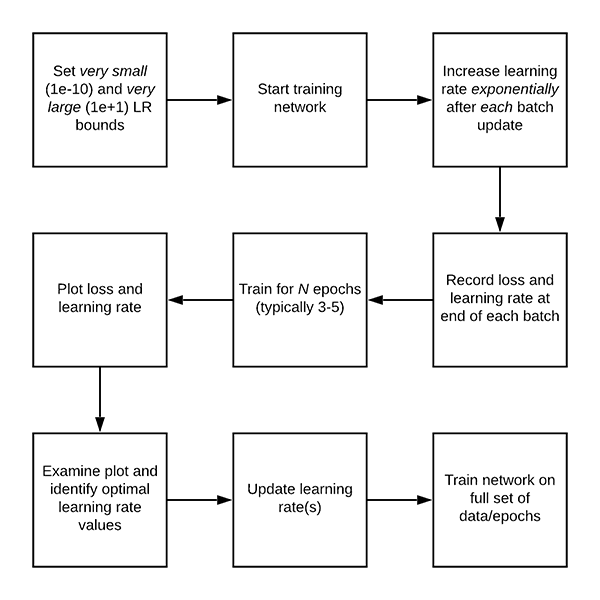
Keras Learning Rate Finder PyImageSearch from www.pyimagesearch.com
This implementation of rmsprop uses plain momentum, not nesterov momentum. We’ll then dive into why we may want to adjust our learning rate during training. A float value or a constant float tensor.
It Is Recommended To Leave The Parameters Of This Optimizer At Their Default Values (Except The Learning Rate, Which Can Be Freely Tuned).
A tensor or a floating point value. This schedule applies an exponential decay function to an optimizer step, given a provided initial learning rate. The gist of rmsprop is to:
If Null, Defaults To K_Epsilon().
Following mobilenetv1 setup we use initial learning rate of 0.045, and learning rate decay rate of 0.98 per epoch. This implementation of rmsprop uses plain momentum, not nesterov momentum. In the first part of this guide, we’ll discuss why the learning rate is the most important hyperparameter when it comes to training your own deep neural networks.
We Train Our Models Using Tensorflow.
A float value or a constant float tensor. Learning rate decay is a mechanism generally applied independently of the chosen optimizer. Maintain a moving (discounted) average of the square of gradients;
Learning Rate Decay Over Each Update.
We train our models using tensorflow. Tensorflow's implementation has parameter called decay, but it's the same as rho in the keras library. Divide the gradient by the root of this average;
A Float Value Or A Constant Float Tensor.
Gradients will be clipped when their absolute value exceeds. The error therefore comes from the following line of code: If null, defaults to k_epsilon().


Comments
Post a Comment